Evolving Cardinal Financial’s Design System into “Northstar”
Reimagining a design system as an AI-native platform connecting design, engineering, and documentation.
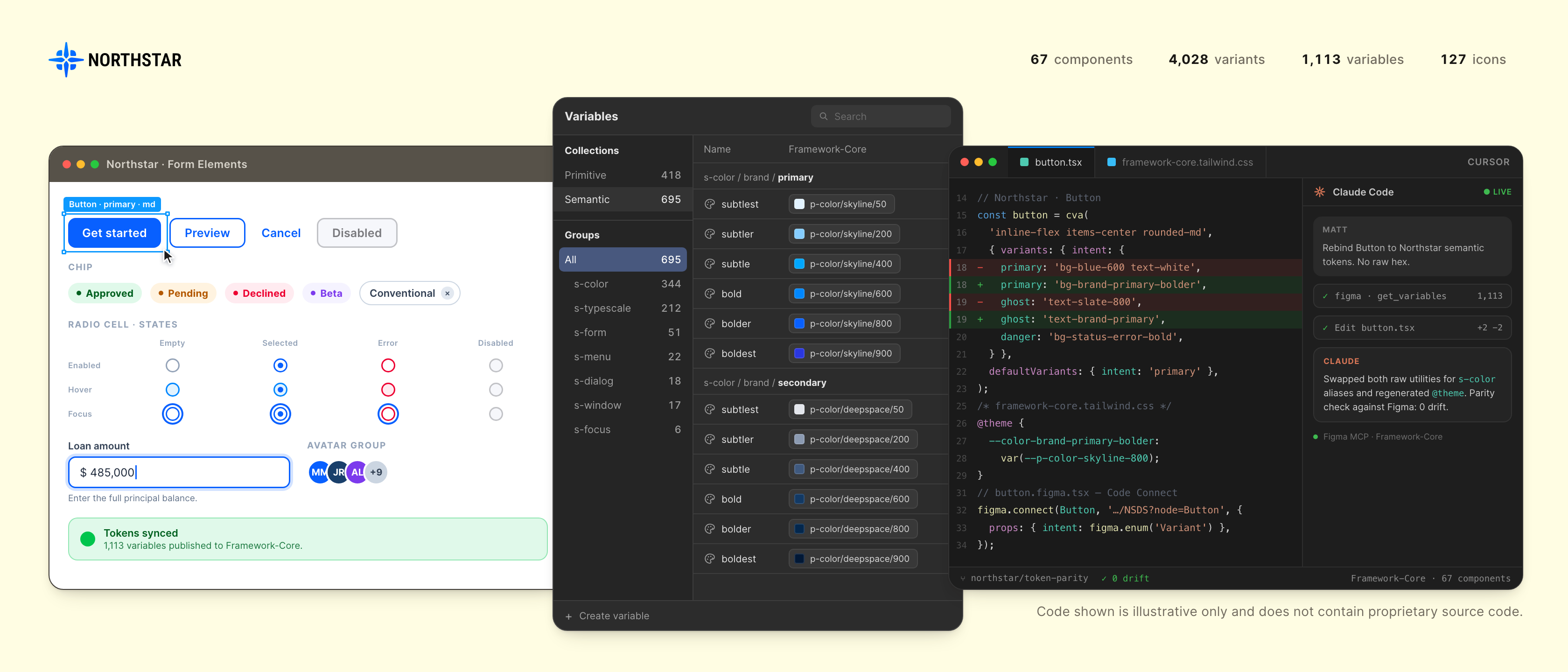
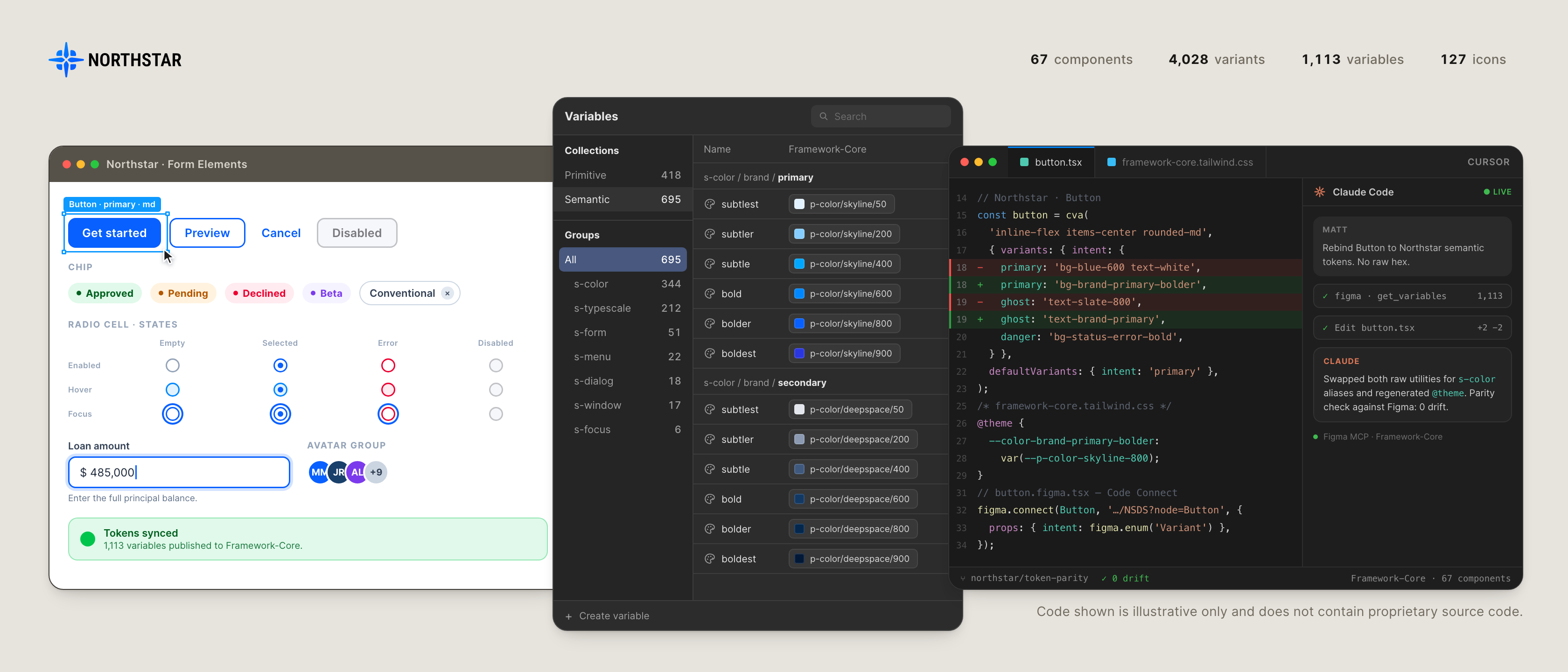
Details
- Service
- Design Systems / AI-Integrated Workflow
- Sector
- B2B & B2C Fintech
- Year
- 2026
- Role
- Co-Lead / Product Designer
- Focus
- Design systems, AI workflows, Design tokens, Governance
Project Overview
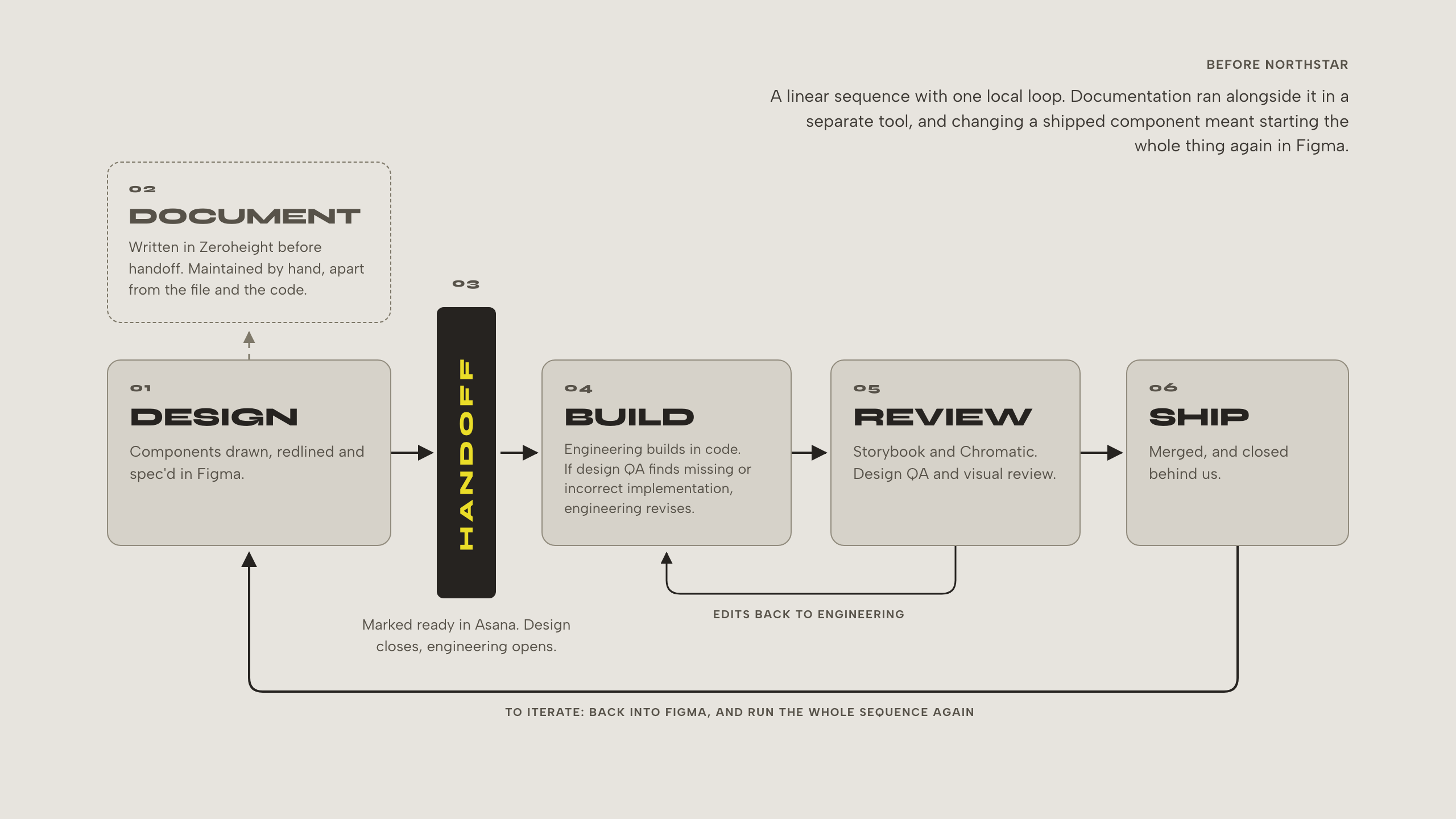
As Cardinal Financial embraced AI across the organization, our design system needed to evolve beyond a static and isolated component library. Existing design-to-development workflows relied on sequential handoffs between product design and engineering, making it difficult to collaborate in real time or move at the speed required by an AI-first organization.
Northstar was created to address that challenge. Rather than focusing solely on reusable UI components, we reimagined the design system as a unified platform that connects design, engineering, documentation, and AI-assisted development through a shared workflow. The result is a design system that continues to evolve alongside the products it supports while enabling teams to build faster, collaborate earlier, and work from a common source of truth.
Impact
Northstar is transforming how product teams design and build experiences at Cardinal Financial.
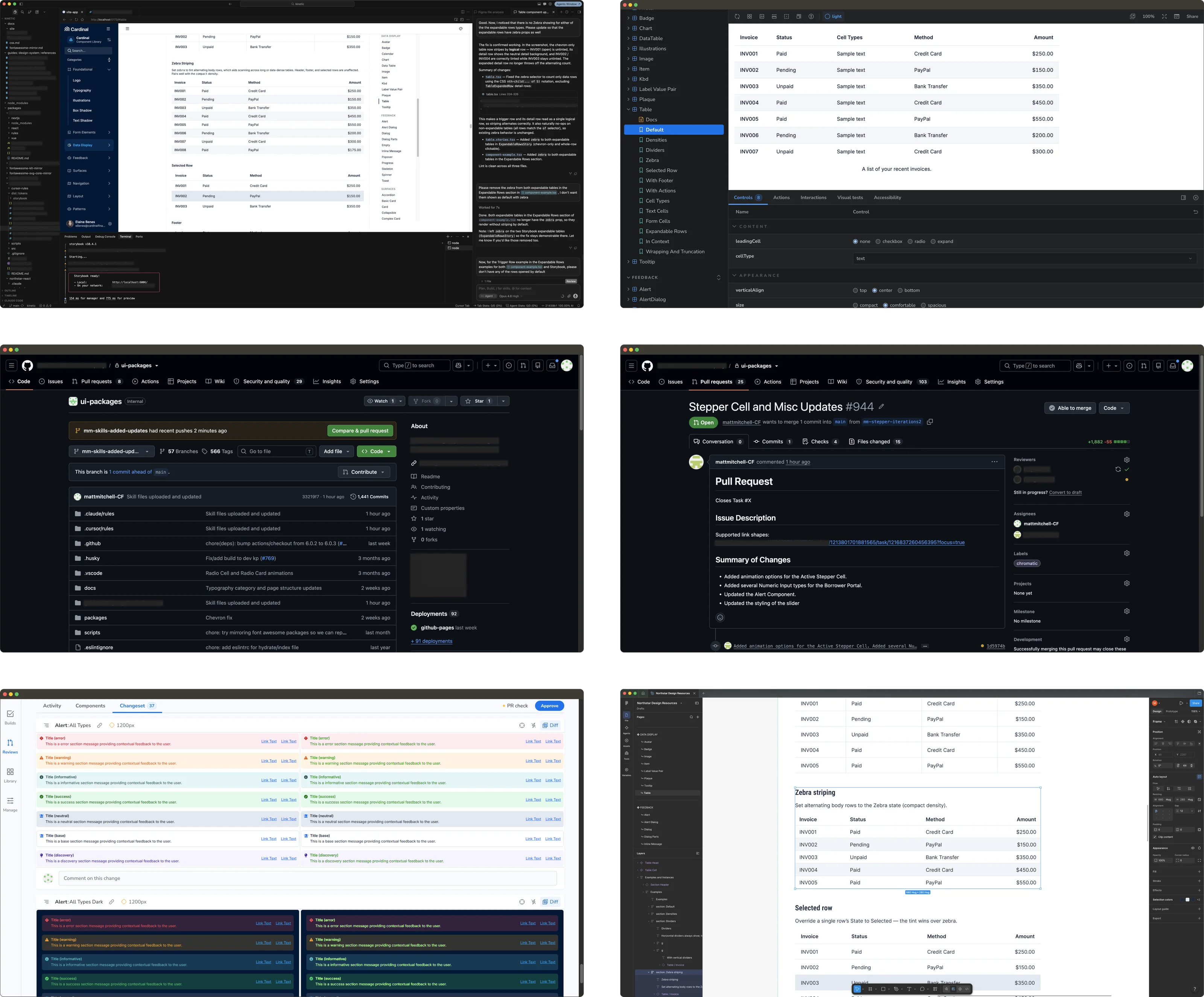
By connecting GitHub, Cursor, Claude Code, Figma, Storybook, and MCP-enabled workflows, Northstar has reduced friction between design and engineering while accelerating component creation and improving design-to-code consistency. Designers now contribute closer to implementation, engineers review components earlier through shared repositories and pull requests, and both disciplines collaborate from the same system of components, tokens, and documentation.
Northstar is actively supporting product redesigns today while establishing a scalable foundation for AI-native product development across Cardinal Financial’s borrower ecosystem, marketing experiences, and future digital products.
My Role
I co-led the development of Northstar to define the direction of Northstar while collaborating closely with front-end engineers, product leadership, and cross-functional stakeholders. Our primary objective was to introduce AI-assisted workflows that strengthened collaboration between design and engineering, helping establish a more connected product development process.
My key responsibilities included:
- Design system strategy and roadmap
- AI-assisted workflow research and implementation
- GitHub, Cursor, Claude Code, Figma, Storybook, and MCP integration
- Design-to-development workflow optimization
- Component architecture and Figma component development
- Design token strategy and implementation
- Documentation and governance
- Accessibility review
- Engineering collaboration and QA
The Challenge
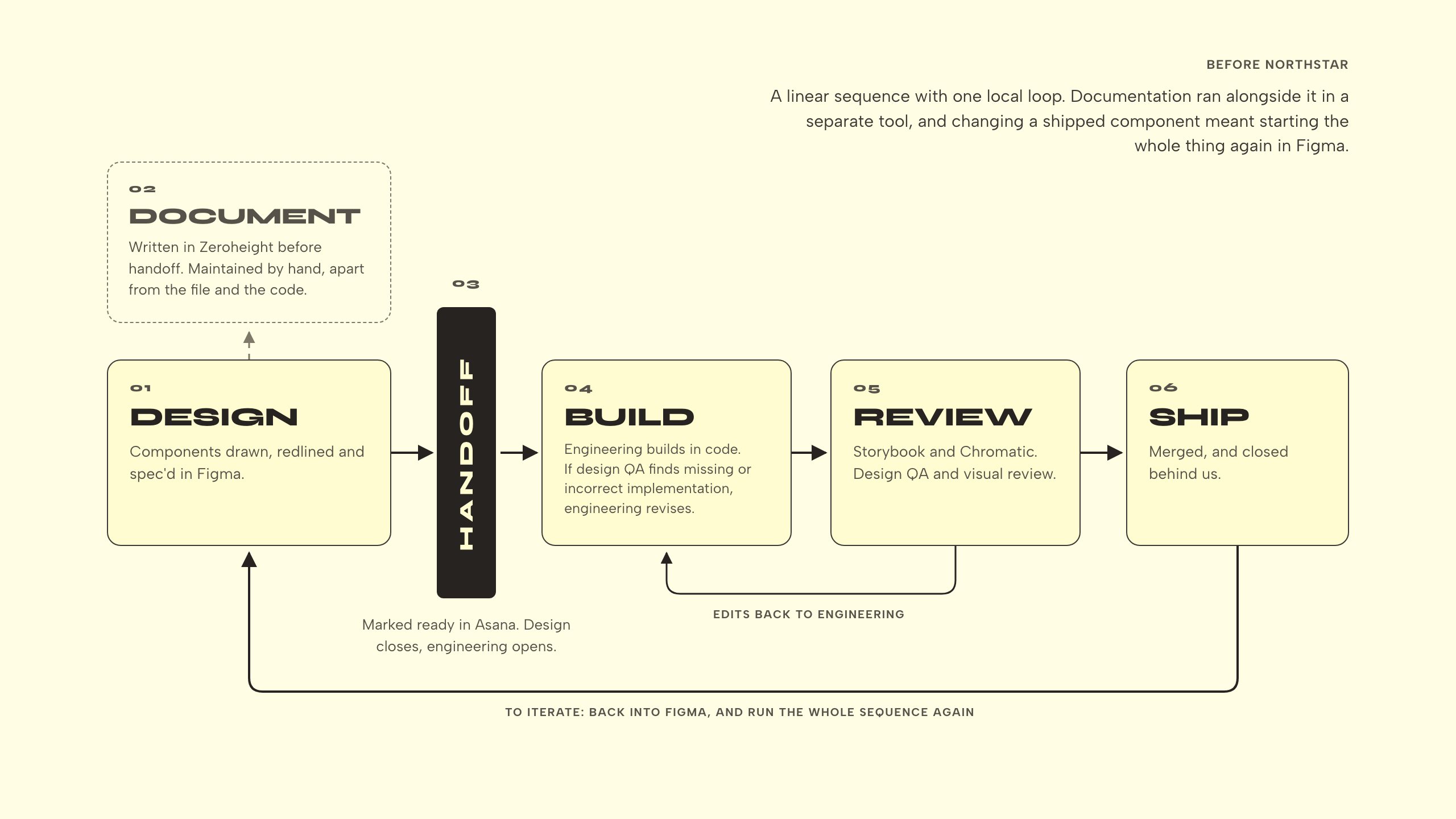
As Cardinal Financial evolved into an AI-first organization, the traditional design-to-development workflow was becoming a bottleneck. While the existing design system provided a strong foundation, the way designers and engineers collaborated had changed very little. Design happened in Figma, documentation lived separately, and implementation began only after a formal handoff to engineering.
At the same time, business priorities, product requirements, and industry expectations were changing faster than ever. Teams needed to iterate more quickly, respond to changing priorities, and build new experiences without sacrificing consistency or quality. A largely sequential workflow made real-time collaboration difficult and slowed the feedback loop between design and engineering.
The challenge was no longer just to improve the design system. It was to create a unified, AI-enabled workflow where design, engineering, documentation, and implementation could evolve together while maintaining a shared source of truth.
Research & Discovery
Rather than approaching Northstar as another redesign of a component library, we began by researching how modern design systems were evolving alongside AI-assisted development. Our focus shifted from simply creating reusable components to designing a workflow that reduced friction between design and engineering.
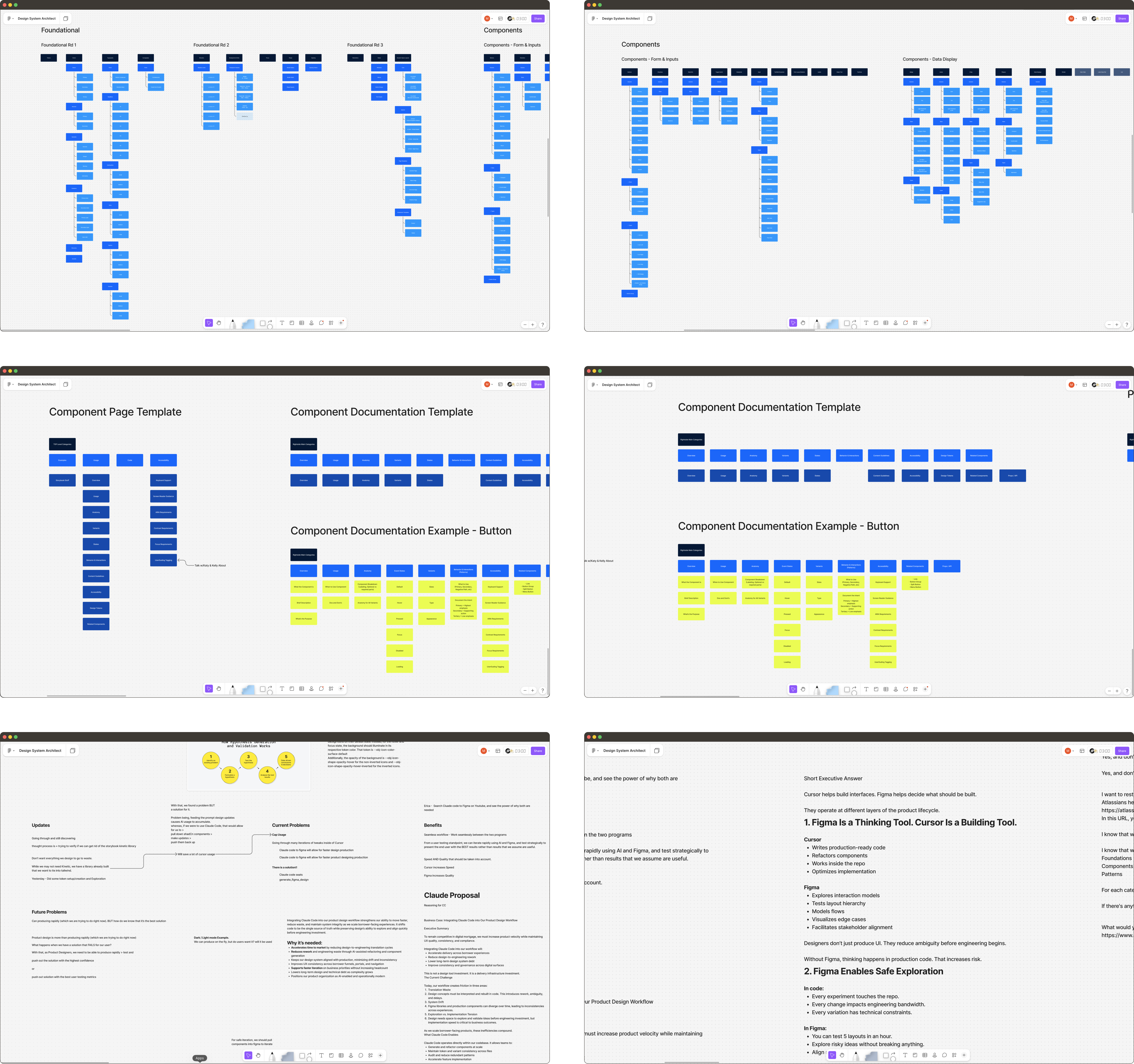
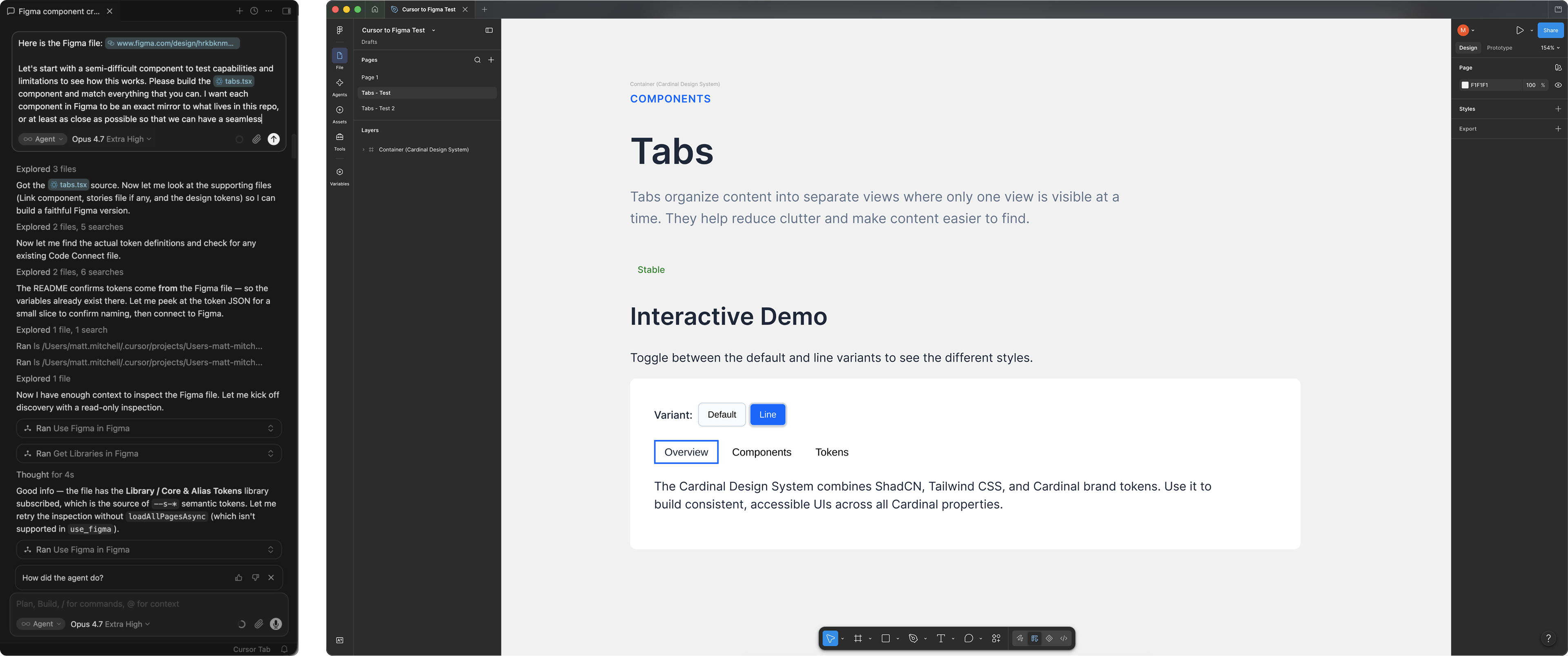
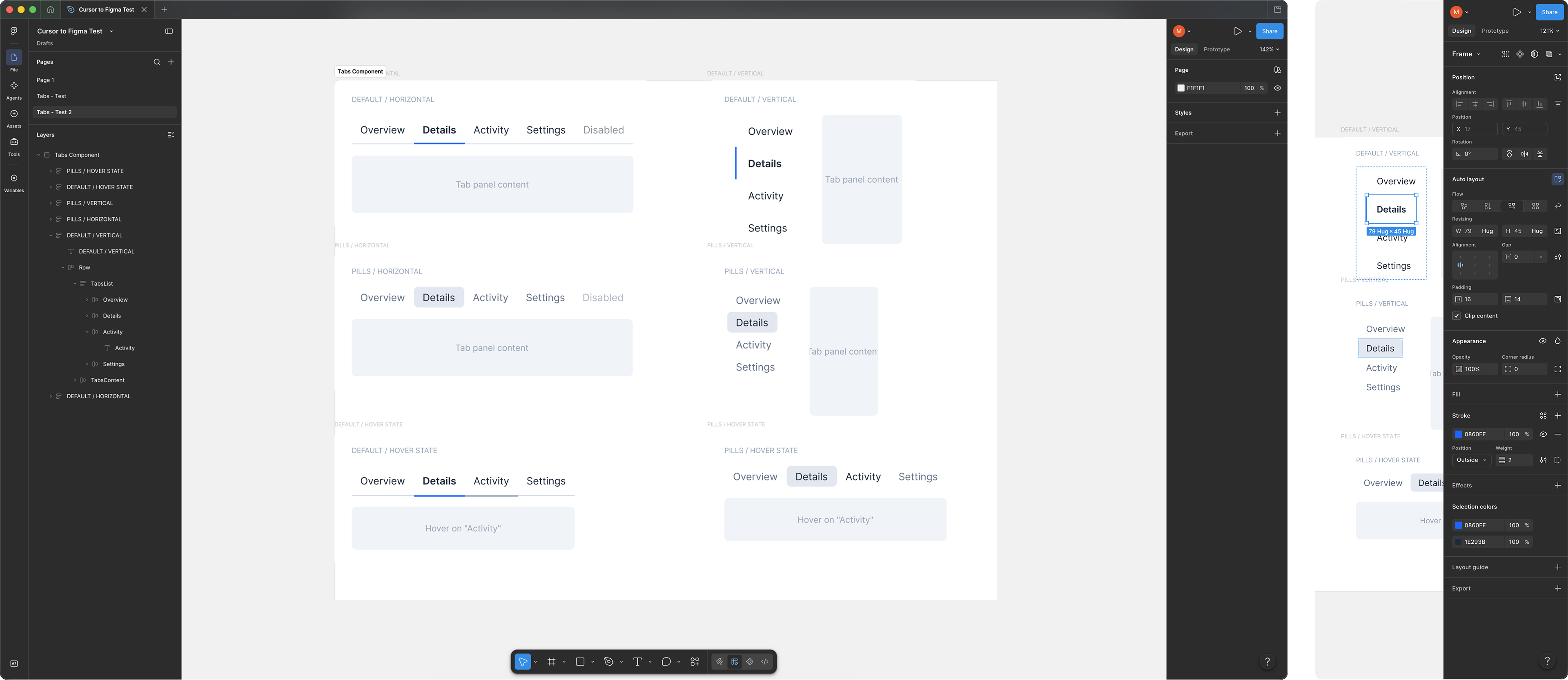
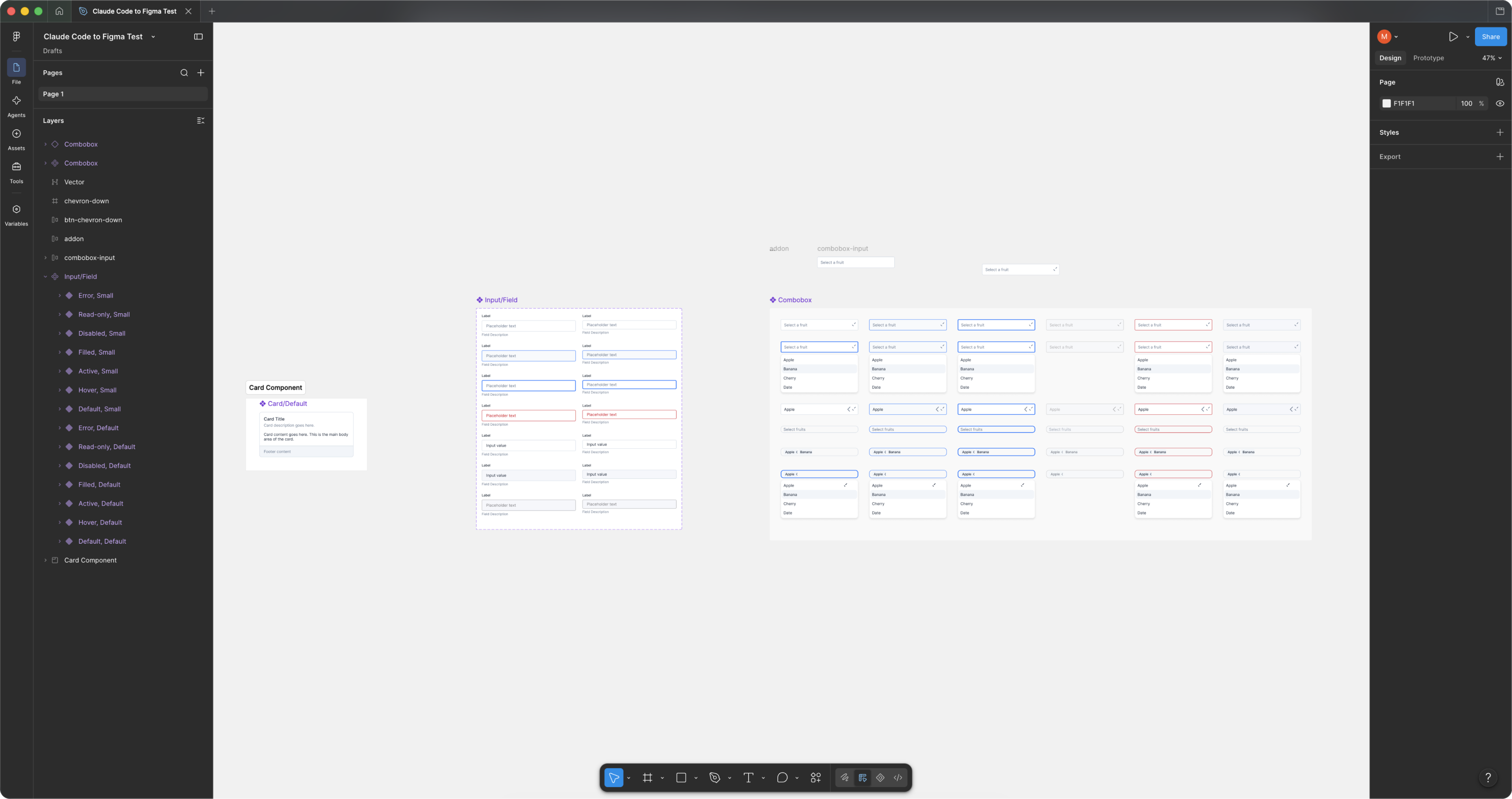
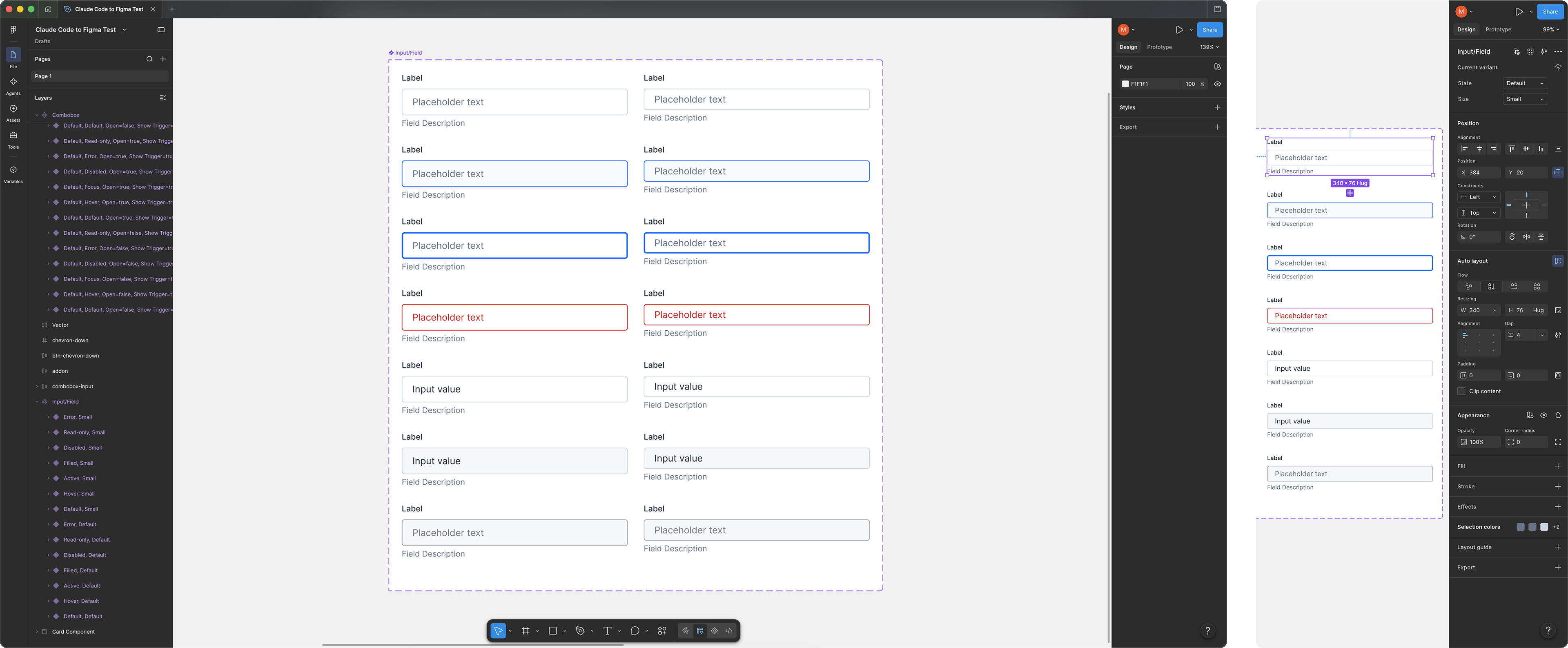
As part of that effort, I explored AI-assisted workflows that connected Github, Cursor, Claude Code, Figma, Storybook, and MCP integrations into a more cohesive pipeline. Early experiments quickly exposed an architectural challenge. AI-generated components produced inconsistent styling, hardcoded values, and conflicting token usage, revealing that the issue wasn’t the AI itself, it was the ambiguity within our token architecture.
That discovery fundamentally influenced Northstar’s architecture and reinforced an important principle: successful AI workflows depend on strong design system foundations.
Solution & Design
By simplifying the token hierarchy and adopting a clearer semantic token strategy, we created a workflow that became significantly more predictable for both designers and AI-assisted development.
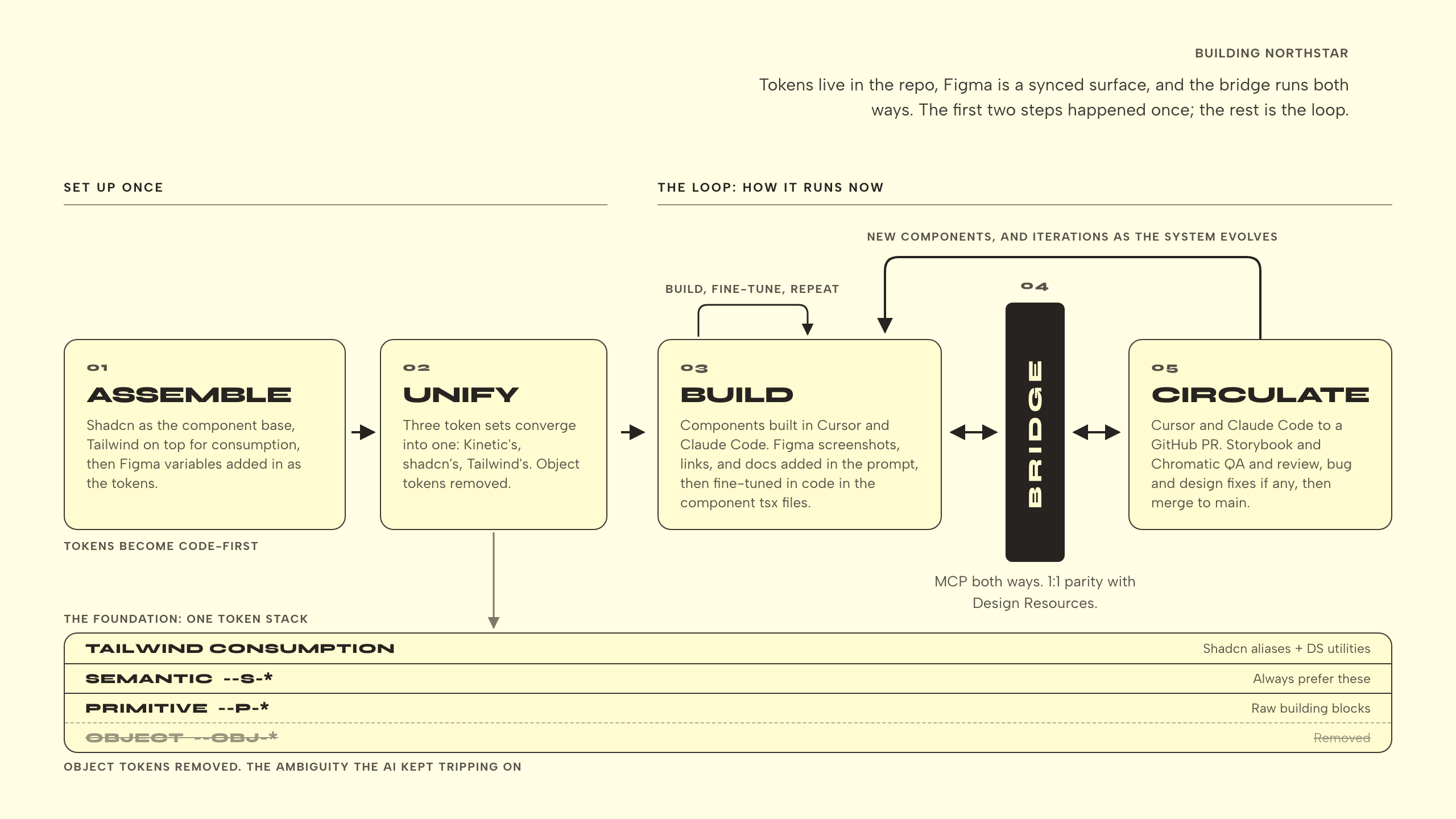
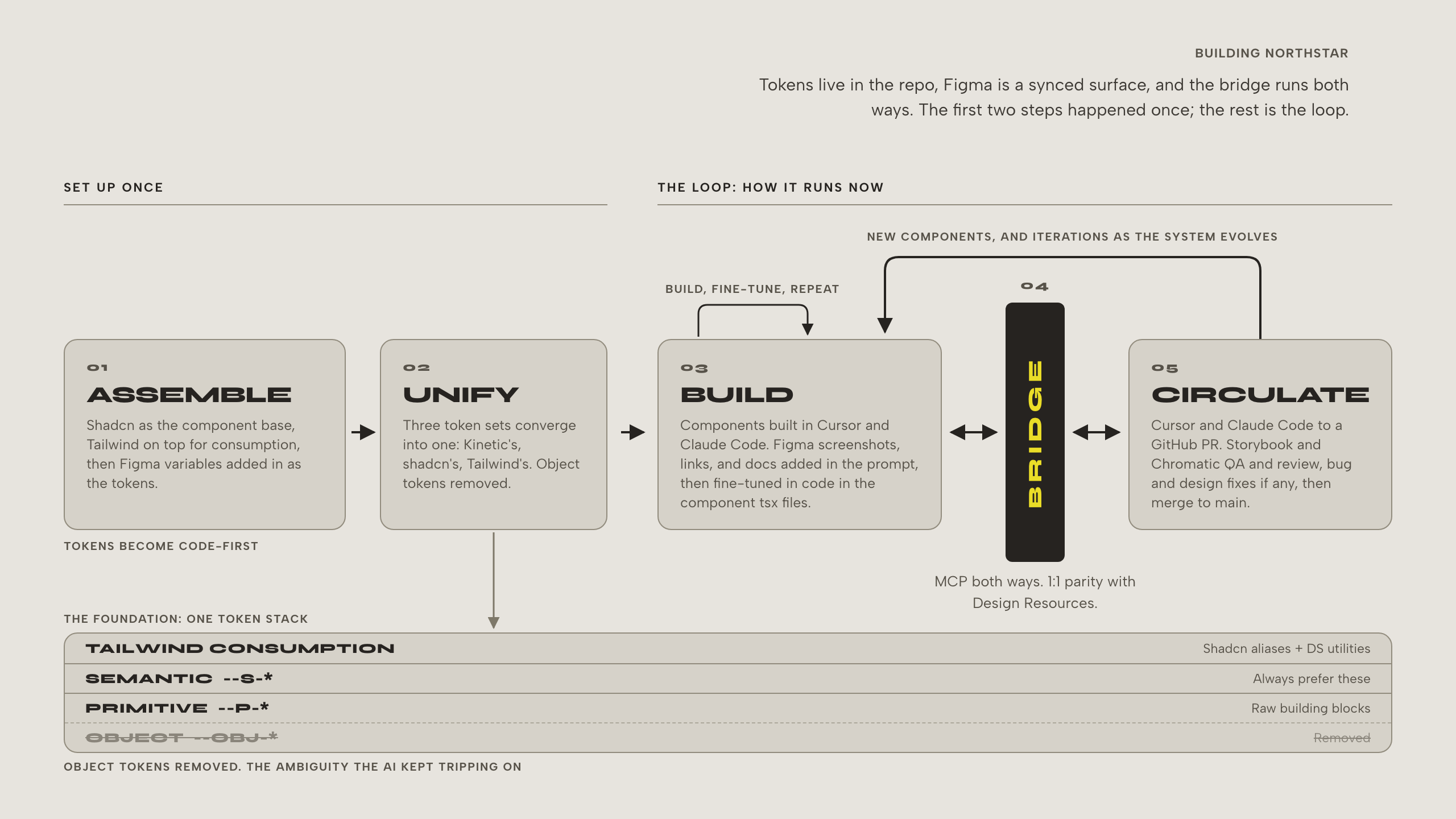
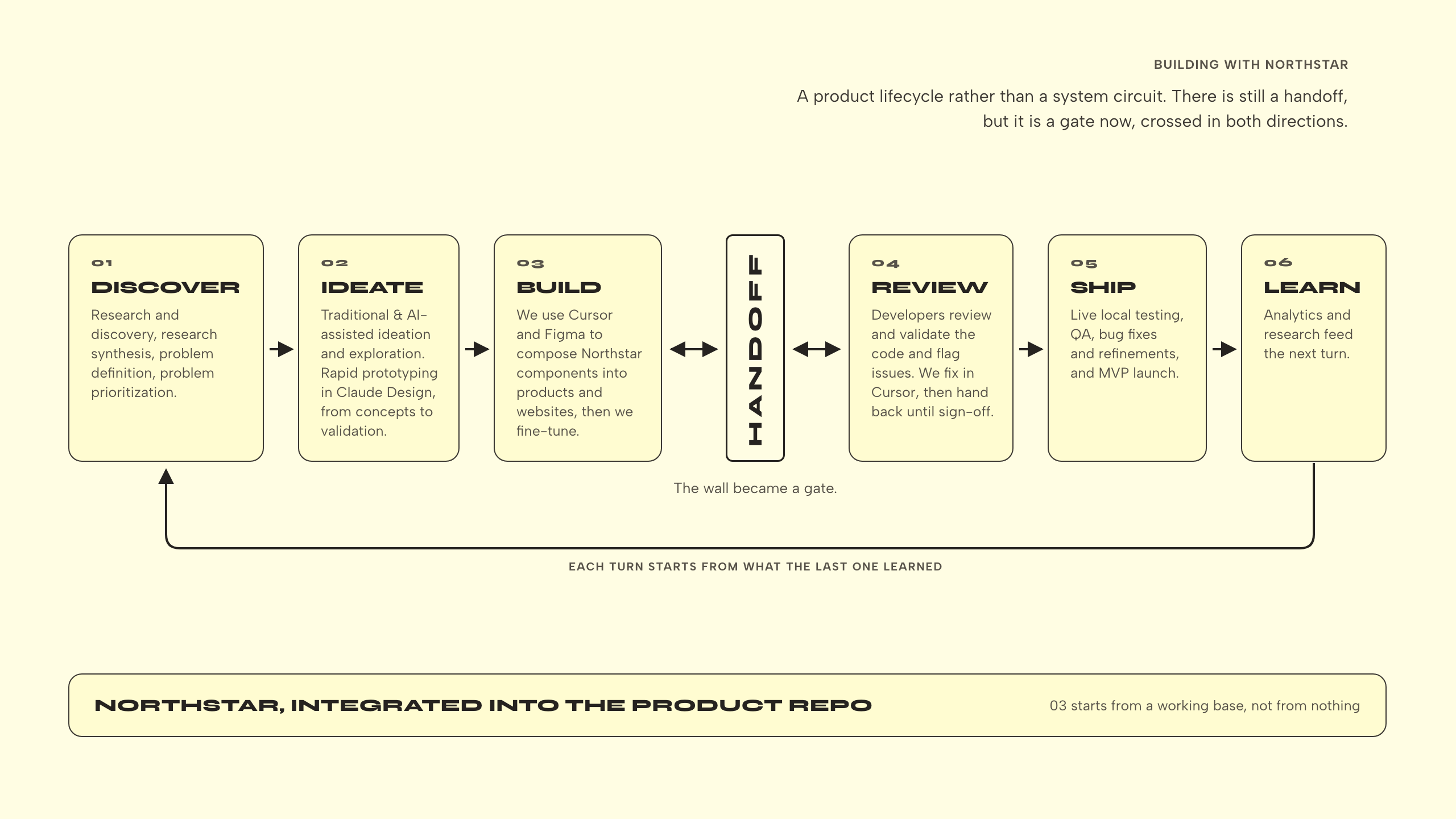
Building on this improved foundation, we integrated Figma, GitHub, Storybook, Cursor, Claude Code, and MCP-enabled workflows, transforming the design-to-development process from a largely sequential handoff structure to a more collaborative and iterative model. Designers can contribute closer to implementation, engineers can review components earlier through shared repositories and pull requests, and both teams can work from a common system of components, tokens, and documentation.
Reflection
Northstar fundamentally changed how I think about design systems.
The biggest challenge wasn’t designing components, it was redesigning the way people work together. Building an AI-enabled workflow required just as much attention to collaboration, architecture, governance, and communication as it did to interface design.
One of the most valuable lessons was realizing that AI doesn’t replace strong design system thinking, it amplifies it. Well-structured foundations, clear token architecture, and shared standards become even more important when designers, engineers, and AI agents are all contributing within the same ecosystem.
Northstar continues to evolve, but it has already reshaped how our teams collaborate and how I approach design systems. I now see them not simply as UI libraries, but as organizational platforms that enable faster product development, stronger cross-functional partnerships, and a more adaptable future for digital product teams.